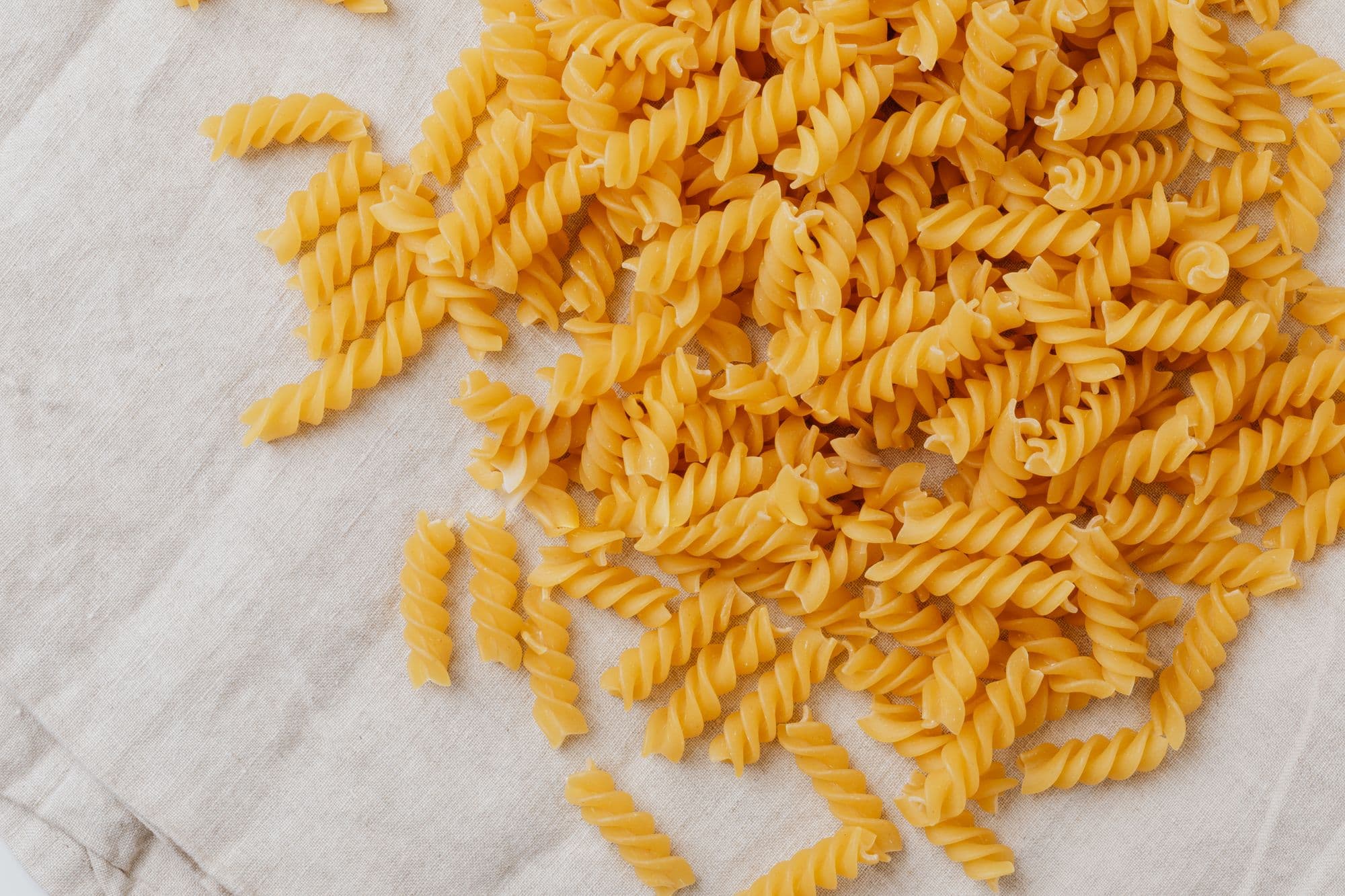
The corkscrew spun around a spindle.
- Italian
- Fusilli
- Category
- Short shaped
- Region
- Southern Italy
- Pastas
- 0 catalogued
The story
Fusilli takes its name from fuso, the spindle, because the traditional shape was made by winding a strip of dough around a thin iron rod — a ferretto — and sliding it free to leave a tight coil. It belongs to southern Italy, claimed most fiercely by Campania, where the towns of the Amalfi and Sorrento coasts and pasta-famous Gragnano each keep their versions, though Molise and Calabria press claims of their own. Some food historians trace the spun technique back further, to Arab-influenced Sicily and Sardinia, where related coiled shapes are still called busiata and busa. What's often sold abroad as "rotini" is the machine-extruded cousin; true fusilli is that hand-wound spring.
Shape & purpose
A short, tight helix — a corkscrew or spring of pasta, its coils twisting around an open center. The spiral is a sauce trap: every turn of the coil holds a little more, and the springy structure gives a satisfying chew. This is the short fusillo; the long coiled strand called fusilli lunghi is a separate shape, and the tighter machine-made spiral sold abroad as rotini is a close relative, not the same thing.
Those coils are built to catch what a smooth shape would shed. Fusilli holds pesto in its grooves, carries chunky vegetable and meat sauces, and grips the dressing in a cold pasta salad better than almost anything. It wants sauces with texture — the more there is to catch, the more the spiral earns its shape.
Sauce pairings
- 01Al pesto genoveseBasil, pine nut, and Parmigiano lodged in every coil.
- 02Al ragùA hearty southern meat sauce the spiral holds fast.
- 03Con verdureRoasted or sautéed vegetables caught in the twists.
- 04Insalata di pastaCold with tomato, mozzarella, and herbs; a summer staple.
Cooking technique
Fusilli cooks in the range of eight to eleven minutes dried — taste, since the dense coils can hide an underdone center. Keep the water at a good boil and stir early so the springs don't nest together. Drain when just al dente and toss with sauce right away; for pasta salad, cool it spread on a tray rather than shocking it under water, to keep the surface starch that helps dressing cling. It's forgiving, but a mushy coil loses the very chew that's the point.
No one’s shelved a fusilli yet — add the one you’ve cooked.